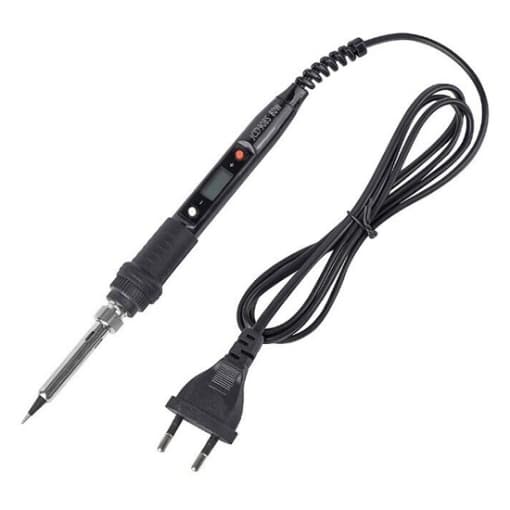
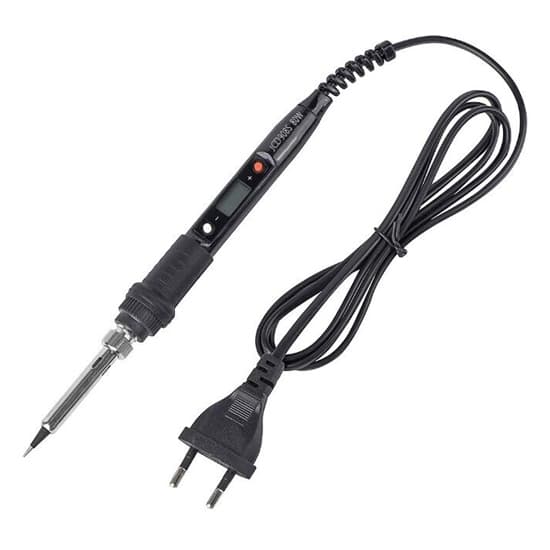
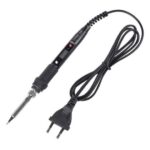
Temperature Controlled Digital Soldering Iron, 80W
Original price was: $23.49.$10.99Current price is: $10.99.
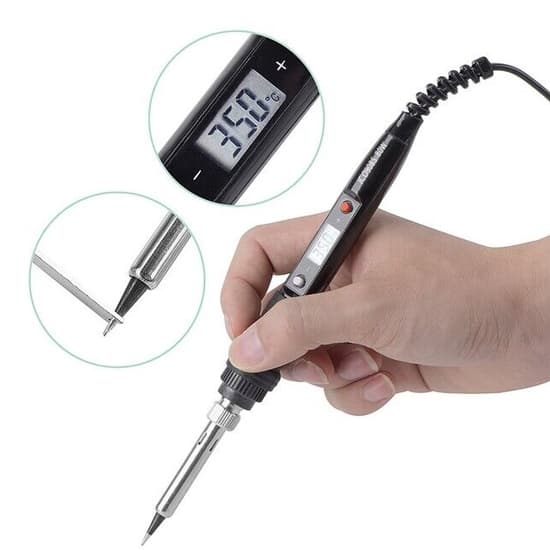
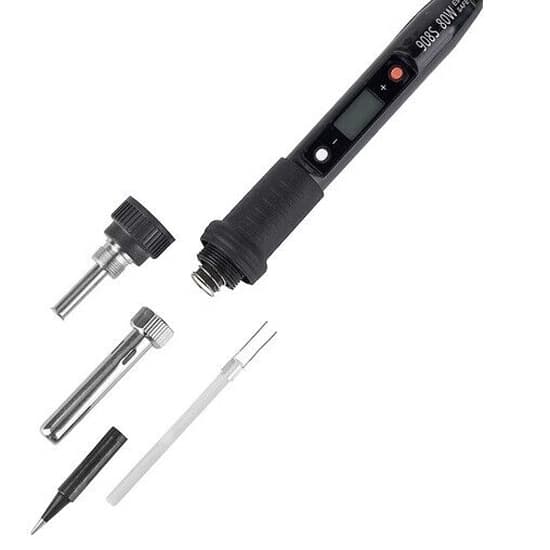
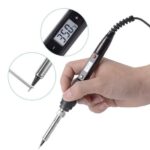
The 80W digital soldering iron is a compact tool designed for precise soldering, featuring an easy-to-read LCD display and adjustable temperature range from 180℃ to 500℃. It offers fast heating and stable performance, making it ideal for a wide range of applications, including circuit board soldering, appliance repair, jewelry making, and DIY projects. The adjustable temperature ensures flexibility for both delicate and heavy-duty tasks, while the ergonomic design ensures comfortable use.
Specification
| Model | T-SI-908S |
| Power | 80W |
| Color | Black |
| Working Temperature | 180~500 ℃ |
| Voltage | 110/220V |
| Power Plug | Euro/US |
| Display Form | LCD |
| Temperature Control | Adjustable Temperature |
| Material | Plastic Handle Soldering Iron |
| Dimension | 290*150*50mm |
| Weight | 0.15kg |
Dimension (Unit: mm)
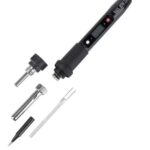
Details
Usage Introduction
- Plug in the power supply to preheat the soldering iron.
- Stick it to the rosin after preheating.
- Use tweezers to insert the part into the board to be soldered.
- Solder (melt the solder wire to the highest level).
- Clean the iron tip of the soldering iron from impurities soaked in the sponge.
- Switch off or unplug when not in use.
Sockets
Applications
Soldering iron is a versatile tool widely used in various fields, including electronics, plumbing, jewelry making, and automotive repair. In electronics, it is used to join electrical components together and repair circuit boards. Plumbers use it to join pipes and fittings. Jewelers use it to solder small pieces of metal together to make intricate designs. Automotive mechanics use it to repair electrical connections and fix broken parts. With its precise heat control and ability to melt and join metals, soldering iron is a valuable tool for anyone working with metal or electronics.
Tips: How does a soldering iron perform its task?
A soldering iron is a hand-held tool used to melt solder (a metal alloy) to join two metal surfaces, such as components on a circuit board. Here’s a basic overview of how it works:
- Heating Element:
The soldering iron has a heating element inside its handle or tip that converts electrical energy into heat. When you plug the soldering iron into a power source, the heating element heats up. - Temperature Control:
Temperature regulation: Many modern soldering irons have a temperature control feature that allows you to adjust the heat to suit the type of soldering you’re doing. The tip typically heats up to between 250℃ (482°F) and 450℃ (842°F), depending on the solder type (e.g., lead-free or lead-based). - Soldering Tip:
The tip of the soldering iron, usually made of copper coated with iron or other durable materials, directly transfers the heat to the solder joint. The tip is the part that comes into contact with the components or work surface. - Melting the Solder:
Once the tip reaches the desired temperature, you touch it to the metal surfaces (such as the leads of a component and a circuit board). The heat from the tip melts the solder wire, causing it to flow and form a bond between the surfaces. - Cooling and Solidifying:
Once the solder is applied, it quickly cools and solidifies, creating a strong electrical and mechanical connection between the components. - Flux:
Flux is often used in conjunction with the solder. It helps clean the metal surfaces, prevents oxidation, and improves the flow of the solder. Flux is commonly found in solder wire or applied separately.
In summary, a soldering iron works by heating its tip, which melts solder to create joints between metal parts. Proper temperature control and tip maintenance are key to achieving strong, reliable solder joints.