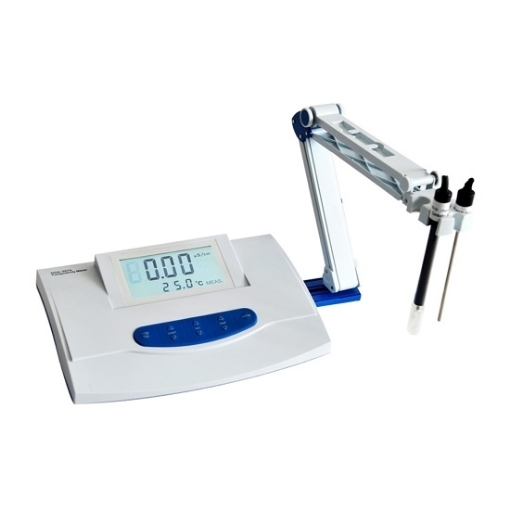
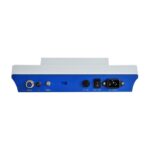
Benchtop Digital Conductivity Meter, Electrodes 0.01/0.1/1.0/10
Price range: $63.99 through $159.22
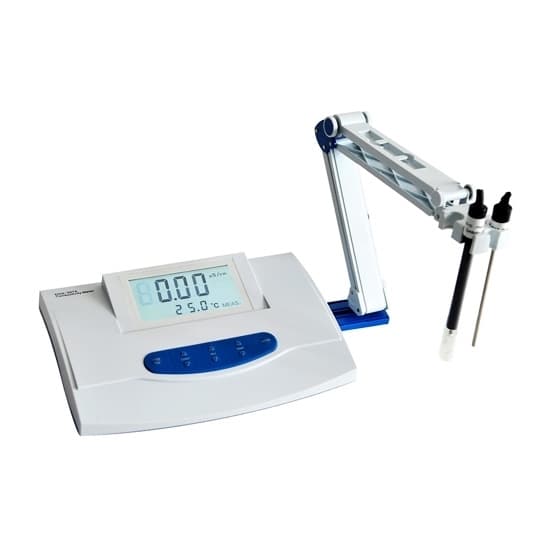
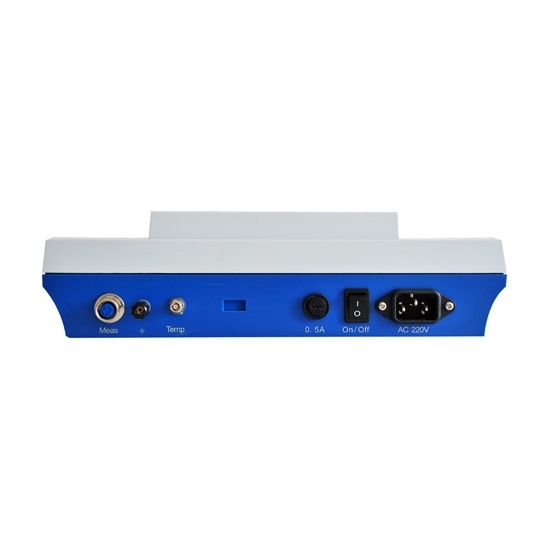
This digital conductivity meter comes standard with a platinum black conductivity electrode and a temperature sensor, and also offers optional electrodes with K values of 0.01, 0.1, and 1.0. It has a measuring range of 0~100mS/cm, uses a 220VAC power supply, and achieves a measurement accuracy of ±1.0% FS, which can meet the laboratory’s requirements for data accuracy. At the same time, this ec tester is equipped with both automatic and manual temperature compensation functions, and is paired with a multi-functional electrode holder that can fix two electrodes simultaneously, making it more flexible to use.
Features
- Easy-to-use button operation.
- High-definition large-screen LCD display for convenient reading.
- Rotatable stand base, light and convenient.
- Multi-functional jacks on the stand, compatible with various types of electrodes.
- Optional conductivity electrodes with K=0.01/0.1/1.0/10.
- Three-point calibration, supporting manual and automatic temperature compensation.
Specification
| Model | T-CDTYM-DDS-307A |
| Shipping weight | 3kg |
| Dimension | 300*220*90mm (L*W*H) |
| Measuring range * | Conductivity: Conductivity electrode (K=0.01): 0.0~2.0μS/cm Conductivity electrode (K=0.1): 0.2~20.0μS/cm Conductivity electrode (K=1.0): 2~10, 000μS/cm Conductivity electrode (K=10.0): 10, 000~100, 000μS/cm (10~100mS/cm) |
| TDS: 0.000~1999 mg/L | |
| Temperatue: 0.0~99.9℃ | |
| Intrinsic error | Conductivity: ±1.0%FS |
| TDS: ±1.0%FS | |
| Temperatue: ±0.3℃ | |
| Accuracy | ±1.0%FS |
| Stability | ±0.33%FS/3h |
| Temperature compensation | 0~40℃ (32~104℉) manual/automatic |
| Temperature sensor | T-818-B-6 |
| Display | LCD display can show measured conductivity value and temperature |
| Operation keys | Conductivity, Conductivity constant, Constant regulation, Temperature, ENTER |
| Functions | Automatic/manual temperature compensation, mutli-function electrode bracket |
| Power supply | AC 220V±22V, 50Hz±1Hz |
| Package included | 1 * Portable conductivity meter 1 * Platinum black conductivity electrod 1 * Temperature sensor 1 * Mutli-function electrode bracket 1 * Power cable 1 * User manual |
Details
Application
Tips: How to Select a Conductivity Tester Electrode Based on K Value?
The electrode K value (unit: cm⁻¹), also known as the electrode constant, is a core parameter that determines the accuracy of conductivity measurement. It must be matched according to the conductivity range of the liquid to be tested. The specific selection criteria are as follows:
- K=0.01 is suitable for measuring ultra-low conductivity liquids, including ultrapure water in the electronic semiconductor industry, high-purity distilled water and deionized water in laboratories. Such liquids have extremely low ion content, and low K-value electrodes can accurately capture weak conductive signals to avoid measurement deviations.
- K=0.1 is adapted to scenarios involving low-conductivity liquids, such as drinking water, mineral water, freshwater in aquaculture, and pure water for food processing. It can meet the needs of water purity testing and freshwater aquaculture environment monitoring, balancing measurement accuracy and range adaptability.
- K=1.0 is a universal electrode, applicable to most conventional scenarios, including acid-base solutions in laboratories, industrial cooling circulating water, raw material liquids in the food and beverage industry (e.g., syrup, fruit juice), and intermediate liquids in the pharmaceutical industry. It covers the medium conductivity range, with wide adaptability and strong practicality.
- K=10 is designed for high-conductivity liquids, such as industrial wastewater, electroplating solutions, seawater, and high-concentration electrolyte solutions in the chemical industry. The high K value can prevent signal saturation during measurement, ensuring the authenticity and reliability of detection data for high-ion-concentration liquids.
The liquid conductivity and electrode K value must follow the principle of “low matches low, high matches high” – the higher the purity of the liquid and the lower its ion content, the smaller the K value should be selected; the higher the impurity or ion concentration of the liquid, the larger the K value should be selected.
| Measuring Range * | , , , , |
|---|